Is it true that "human body on fire cannot be saved with water"? Let's not say how complex the composition of the skin is. If the human body is burned, is it right away to the dermis to burn? These are all doubts. Only from these so-called first aid Encyclopedia of articles to analyze, there is a problem. "Every fat molecule in your dermis is an oil". Human body fat is solid, while our impression of ordinary edible oil is liquid. Although it is all fat and can burn, it can not be compared with each other. This kind of rumor is more terrible than the general rumor, because the object of their rumor is emergency means.
First aid means emergency treatment, which means that in case of any accident or emergency, the rescuer shall, in accordance with the principle of medical care, temporarily and appropriately carry out preliminary rescue and nursing for the injured and the injured by using the applicable materials on site before the arrival of medical staff, and then send them to the hospital as soon as possible.
In case someone really catches fire, after reading this rumor, they don't need water to save it. It's really dangerous! Sometimes, people's ideas are more harmful than actual disasters. Therefore, we feel that it is necessary to refute the rumors and find out the misunderstandings in various first-aid methods, so that we can master the most basic first-aid methods.
First aid: burn
Following the introduction of the reader's question at the beginning, let's talk about first aid for burns.
Burn is actually a very wide range, the accurate definition is actually: all heat sources to human body tissue damage, heat sources are mainly fire, hot water, etc.
Therefore, in medicine, scald is actually a kind of burn.
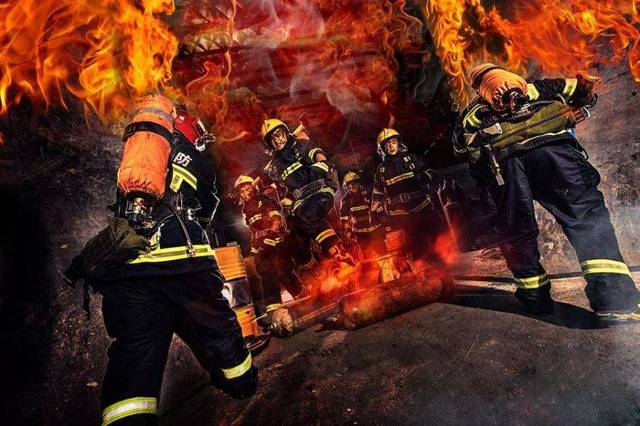
If it's a fire, even if your skin is on fire, what's the best way to do it?
Water!
In fact, as early as 2014, a strong man in Shanxi tried fire with his left arm drenched with alcohol to burn, and then put out the fire with water. This shows that even if alcohol and other flammable substances catch fire on the human body, water is still the best first-aid method.
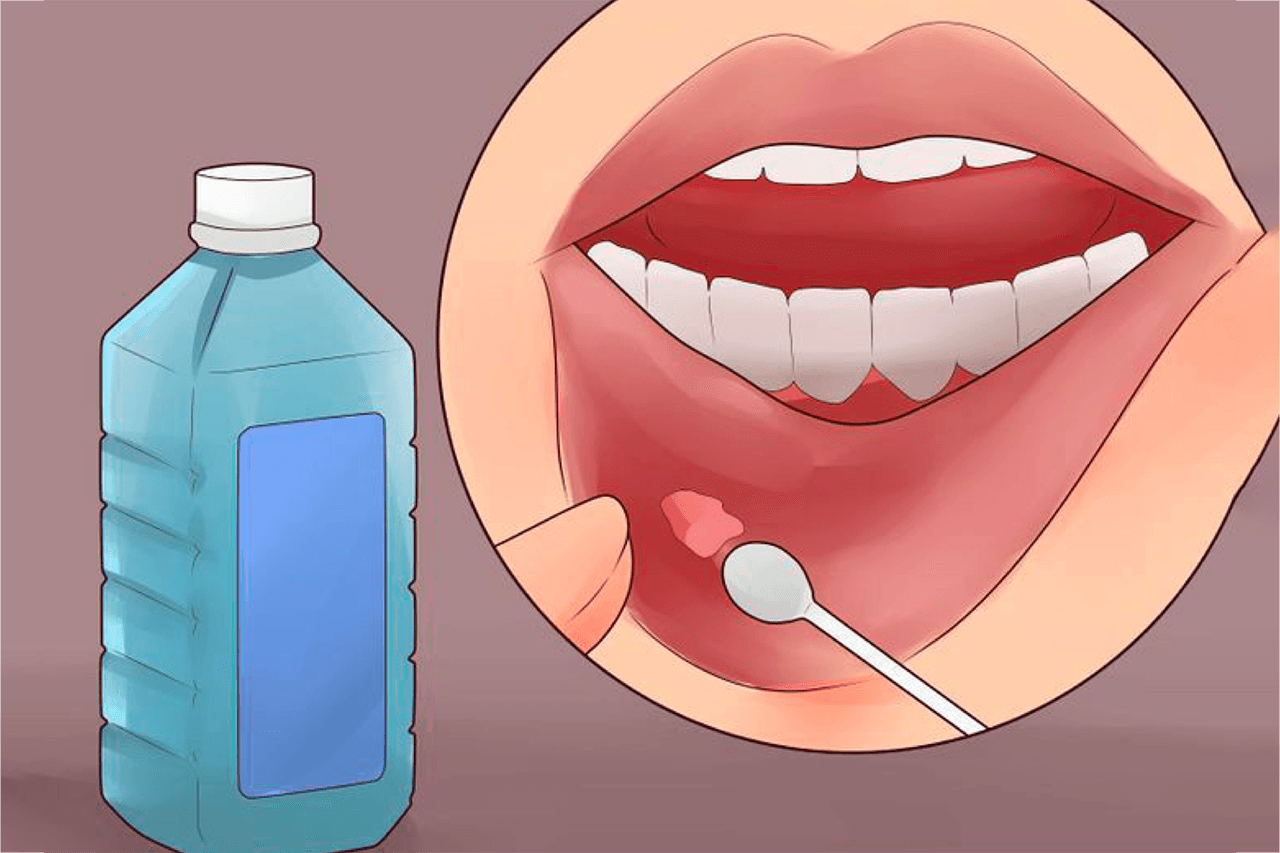
After burn can besmear scald ointment what? If the injury is slight, it can be applied; if the burn is serious, do not apply any ointment - especially the folk formula toothpaste, soy sauce, including saliva! Because they are easy to cause infection, causing light or heavy secondary injury. For severe burns, do you want to bandage it? Better not.
Even if you bandage with gauze, the wound and gauze will stick together in the end, and then a layer of skin will be uncovered, which will make the burn person absolutely miserable. The best way is to cover a cloth and send it to the hospital immediately.
Therefore, the first aid trilogy of burn is as follows:
Flush water (either to put out the fire with water or to cool down after burns), cover with cloth and send to hospital.
That's it.
First aid 2: hemostasis
There are two kinds of hemostasis: packing hemostasis and compression hemostasis.
Packing hemostasis is usually used to stop nosebleed.
In hemostasis first aid, our most common mistake is: most of the time when nosebleed, choose to put the head back, think this can stop nosebleed.
In fact, this is wrong
Because after looking up, nosebleed will flow into the lungs through the airway. What happens when the liquid enters the lungs? Think about how you feel when you're submerged in the water. Yes, it's suffocation.
Therefore, after nosebleed, lean forward, bow head, open mouth to breathe, pinch nose wing with thumb and index finger, wait for blood to stop or plug a ball of cotton.
The most commonly used hemostasis method is compression hemostasis.
Whether it is arterial, venous or capillary bleeding, massive bleeding or a small amount of bleeding, we can directly use the method of pressing the bleeding site to stop bleeding.
For example, the most dangerous place for human bleeding is the neck.
Because the neck skin is thin and fragile, it protects the airway, esophagus, carotid artery, jugular vein, thyroid and other important structures. It is also the throat area connecting the brain and the trunk. If this area bleeds, the consequences will be unimaginable.
If the large blood vessels in the neck are bleeding, the most important thing is to use the thumb to compress the carotid artery and jugular vein at both ends of the damaged part, so as to stop bleeding and prevent air from entering the heart.
It's good to be able to stop bleeding. The rest is to dial 120 in time for the doctor to arrive.
The general treatment of bleeding is as follows:
First, cover the wound with clean accessories, handkerchief, etc.; second, compress the bleeding site, and the bleeding will stop after a few minutes; third, if possible, consider pressure dressing.
First aid: drowning.
Last summer, the museum wrote an article about drowning
"Swimming back, children drowning in bed: summer vacation about the misunderstanding of children drowning, you must know"
On the timely detection of drowning, you can review the article.
The first aid for drowning is as follows:
First of all, a principle, found that the drowning in the water, if you have not received professional rescue training, do not go into the water to save people! No matter how good you are!
Second, if the drowning person has been rescued from the shore and is in a coma, cardiopulmonary resuscitation should be carried out immediately.
However, there is also a misunderstanding: the rescued Drowners need to control the water immediately, and even have such a first-aid formula:
"Drain head down, jump back on back, bump on ox back."
In fact, this is also a misunderstanding.
Modern medicine has long been widely recognized as follows:
It can also cause airway obstruction and gastric reflux.
That is to say, water control is harmful and not beneficial. It is better to carry out cardiopulmonary resuscitation immediately for the drowning person whose heart stops.
The process of cardiopulmonary resuscitation is as follows: first, clear the foreign body in the mouth and nose of the drowning person, and then carry out artificial respiration.
The process of artificial respiration: five consecutive mouth-to-mouth breaths, 30 cardiac compressions, 2 mouth-to-mouth breaths, and 30 cardiac compressions, at a cycle of 2:30 until the ambulance arrives.
First aid four: airway obstruction
You know what? Every year, about 3000 children die of asphyxia due to swallowing foreign bodies in China.
If you swallow a foreign body and stick it in your throat, in fact, no matter it is an adult or a child, if the time is more than 2 or 3 minutes, it is likely to suffocate and die.
What we usually do is to pat him on the back with his hand directly, thinking that we can take the foreign body out? But the foreign body will fall down, you pat the back is back and forth movement, two do not match the edge.
Or use your hand to pick it out to see if you can pull it out, but the foreign body gets deeper and deeper.
In fact, these methods are not very useful, and they are all serious misunderstandings.
The most effective method is Heimlich emergency treatment.
Let me not say the empty, I will directly introduce:
The first group is children under 3 years old
1. Take the baby's face down and take the dive position, and pat the position between the back scapulae of the baby with the palm root for 5 consecutive times.
2. If it is not successful to pat the back, take the dive position with the baby's face up, press two fingers in the middle of the baby's chest, and press hard for 5 times continuously.
3. If it is not successful, repeat the above operation until the foreign body is discharged.
The second category of people is children and adults over 3 years old who can walk upright.
The rescuer encircles the rescued person from the back and clenches the fist with one hand. The fist eye is located above the navel and below the ribs of the rescued person. The other hand holds the fist holding hand, and impacts the victim's upper and posterior part of the upper abdomen rapidly and forcefully, resulting in artificial cough effect until the foreign body is vomited out.
Since its inception in 1975, the simple Heimlich emergency method has saved at least 100000 lives. If every Chinese can learn how many precious lives to save every year.
First aid for sudden death
Many people think that sudden death is sudden death. Is there any need to save it? This is the biggest mistake in first aid! First aid for sudden death not only has methods, but also is not difficult to learn. Sudden death has the so-called "golden four minutes", that is, if the sudden death patient can be rescued within these four minutes, he may not be hurt. But if more than six minutes, the brain hypoxia for a long time, he will have sequelae, the most serious can become a vegetative; if more than 10 minutes, there will be no way back.
But unfortunately, among 544000 people who die suddenly every year in China, the successful recovery rate is less than 1%! Among the 450000 people who die suddenly every year in the United States, the successful recovery rate is as high as 30%!
Emergency treatment for sudden death in our country has reached the point where it has to be popularized. Dr. Jia Dacheng, the first person of emergency science popularization in China, summed up four simple steps
Judgment, call for help, pressing, defibrillation
First, if someone falls down suddenly, the first thing you do is to judge whether he has a cardiac arrest.
By what? For example, by asking questions like, "wake up, what's wrong with you?" If the other party is conscious, it is a living person;
If he loses consciousness, he may not die. It depends on whether he breathes. If the other side's chest has ups and downs, it is breathing, but coma, is a living person;
If his chest did not rise and fall, he would not die, but his heart stopped! We have to go to the second step, call for help!
Call 120 immediately. If you are the only one now, you can turn on your mobile phone hands-free and talk to 120 while carrying out the third emergency.
Third, press. Place the base of the palm of the palm between his two nipples, the other hand overlapping on the first hand, fingers crossed, two arms basically vertical, press down with the weight of the upper body, press 100-120 times per minute.
Instead of artificial respiration, just press until the ambulance comes to the scene, or a defibrillation machine comes to you.
Brain disease, cardiovascular disease can be the cause of sudden death, the elderly and young people can become the victims of sudden death.
Don't think sudden death is far away from you. After all, our life is to die.
Learn first aid as soon as possible, at least we can be a little far away from death.