It's natural for children to play in the water. Accidental drowning is always hard to avoid. But do you really know how to save children from drowning? There is nothing wrong with the staff's eagerness to save people, but if they master the common sense of first aid for drowning, they can strive for more survival hope for drowning children.
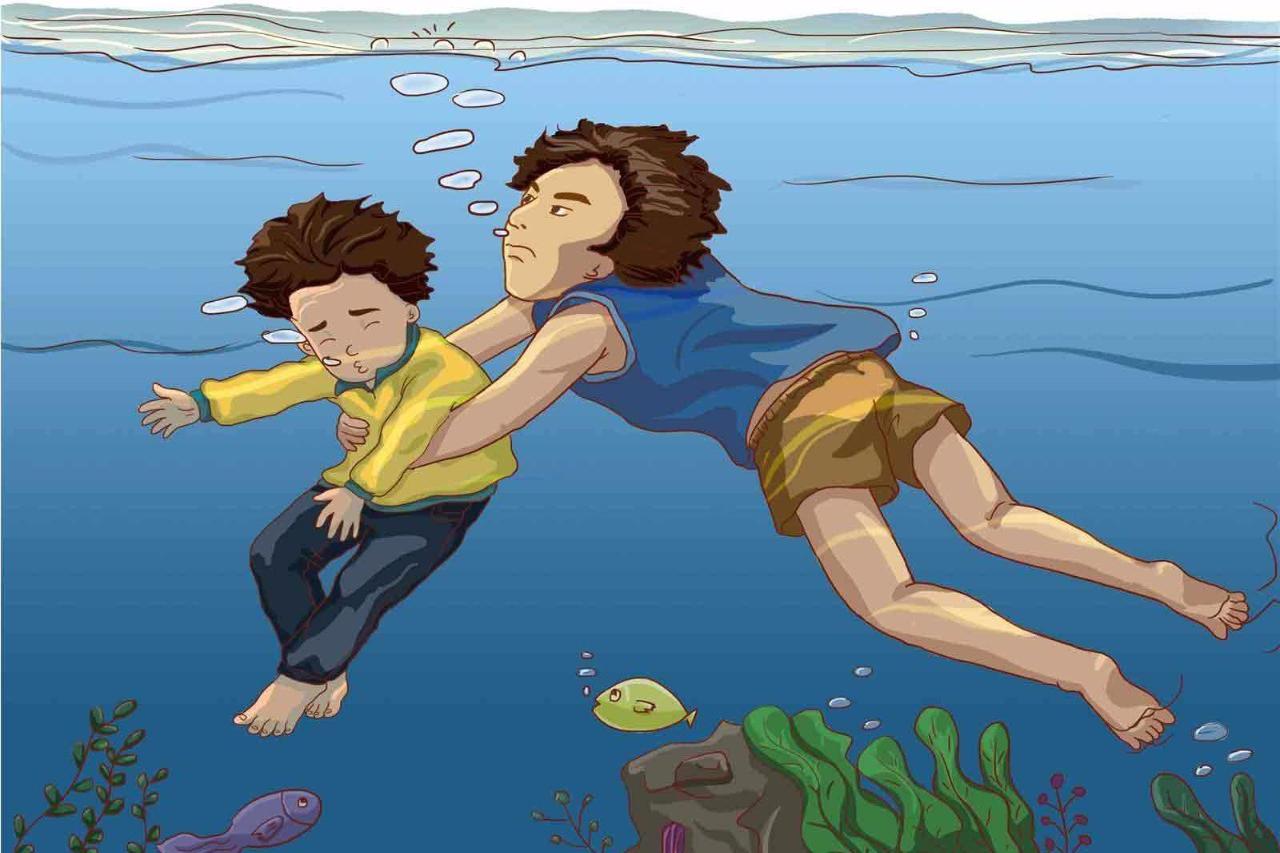
First of all, it should be clear that for conscious or comatose people with breathing, the drowning time is short and there is no need to control the water. Water control will increase the chance of reflux and even suffocation.
According to incomplete statistics, thousands of people drown in public swimming pools every year in the United States. In view of this phenomenon, their lifeguard 10-10 scanning method has effectively reduced the drowning rate. The specific method is that the lifeguard stands at a high place and observes the swimming pool every 10 seconds. If an accident is found, the rescue operation will be carried out immediately within 10 seconds. This practice gives us the biggest enlightenment is: do not panic when encountering drowning people. It is the key to rescue people from the water.
Remember not to do any form of water control, lung water is not easy to control, there is no evidence that water will become a foreign body blocking the airway, lung water can be removed by blood circulation during cardiopulmonary resuscitation. When controlling water, the gastric contents will be controlled out, resulting in reflux and even asphyxia, which will delay the golden time of cardiopulmonary resuscitation.
According to the different state of patients, take different emergency measures
1. For sober, breathing and pulse patients: call 120, accompany, keep warm, wait for rescue personnel or send to hospital for observation.
2. For coma (no response to call), breathing and pulse patients: call 120, clear the mouth and nose foreign body, stabilize the lateral position, and wait for rescue personnel. Close observation of respiratory pulse, if necessary, cardiopulmonary resuscitation.
3. For coma, no breathing and pulse patients: similar to the "feigned death" state, the patient has laryngospasm, no breathing, weak pulse and is on the verge of stopping. At this time, only open airway and artificial respiration are given, and the pulse and heartbeat can be rapidly enhanced. After breathing, the patient can lie on his side and wait for rescue personnel.
Learn common sense of safety in swimming
1. Swimming tips
1. Swimming must be led by parents (guardians). Swimming alone is the most likely to cause problems. If your partner is not a parent (adult), it is difficult to ensure that you can get proper help in case of danger.
2. Don't go swimming if you are sick. Patients with chronic diseases such as otitis media, heart disease, skin disease, epilepsy, red eye disease, cold, fever, mental fatigue, and physical weakness are not allowed to go swimming, because the above-mentioned patients participate in swimming, not only easy to aggravate the disease, but also prone to cramps, accidental coma, life-threatening. Patients with infectious diseases are easy to transmit the disease to others. In addition, female students should not swim during the special period of each month.
3. After taking part in strenuous exercise, you can't jump into the water and swim immediately, especially when you are sweating and have a fever all over the body. Otherwise, it will easily cause cramps and colds.
4. It is not suitable to swim in polluted (poor water quality) rivers and reservoirs, where there are rapids, where two rivers meet, and where there is a large drop. Generally speaking, it is not suitable to swim in rivers and lakes where the water condition is not clear.
5. It is also not suitable for swimming in bad weather such as thunderstorm, windy and sudden change of weather.
2. What should be paid attention to in swimming process
1. We should take care of each other and care for each other, instead of playing with each other or playing tricks on each other. Go swimming together. If someone goes ashore ahead of time, tell your partner that you should go swimming together and go home together.
2. All swimming in natural swimming places (such as rivers, reservoirs, reservoirs) should be led by parents and relatives. It is especially emphasized that beginners should not go swimming in the wild.
3. Pay attention to rest, do not swim long distances, do not stay away from partners. If you feel unwell, tell your partner and go ashore to rest. Watch your partner swim on the bank and pay attention to their safety.
4. Primary and secondary school students do not swim snorkeling, nor can they compare with each other who has longer diving time and longer diving distance. It's very dangerous to do so.
3. Emergency and self rescue in swimming
1. Cramp: is the muscle involuntary tonic contraction, water temperature is too low or swimming time is too long, may cause cramps, the most important thing is to keep calm, do not panic.
2. General treatment.
(1) If you find cramps, you should stop swimming immediately, go ashore immediately and massage the cramped parts.
(2) If cramps occur in deep water, and you are unable to deal with them, and there is no companion around, you should call for help from the shore, do not panic.
Again: no matter what kind of cramp happens, call to your partner or other swimmers first: "I have a cramp. Come on