French thinker Voltaire once said: life lies in movement! And the simplest exercise is walking, it is also a health care method that we don't need to spend money. Walking is not only to keep us healthy, but also to help us recover from illness. At ordinary times, taking an hour to walk every day can make your mood happy, and can promote the metabolism and blood circulation of the whole body, which is conducive to physical and mental health, and can prevent a variety of diseases.
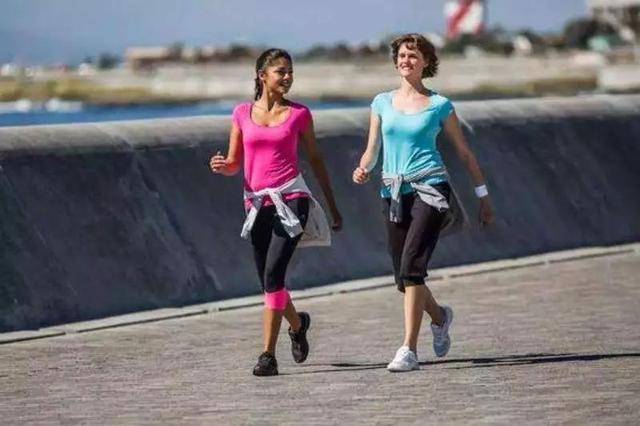
1. Nine health effects of walking
1. Prevention of heart disease
Through walking to exercise their body, can enhance the cardiopulmonary function, is conducive to the maintenance of the heart. In the process of finding, you can make your mood become pleasant, you can keep your mood calm, you can discard some bad emotions such as irritability and depression, and maintaining a positive and optimistic attitude is also conducive to heart maintenance. Studies have found that regular walking exercise is conducive to the health of blood vessels, can prevent atherosclerosis.
2. Prevention of brain atrophy
Studies have found that people who walk no less than 9.6 kilometers a week have increased brain volume, which can prevent brain atrophy, improve memory and intelligence, and prevent Alzheimer's disease.
3. Prevention of diabetes
People are very afraid of diabetes. In fact, it is very simple to prevent diabetes. As long as you take half an hour to walk every day, you can reduce the risk of diabetes. Long term sedentary lack of exercise is an important cause of diabetes.
4. Prevention of venous thrombosis of lower extremity
In the process of walking, the muscles of the lower limbs will contract and relax, which will let the blood return to the heart from the far end of the limbs, promote the blood circulation of the whole body, avoid venous thrombosis of the lower limbs, and fully move the ankle.
5. Prevention of cervical spondylosis
When walking, our head and neck will be free to move, and the shoulder and back will also move, which is conducive to the health of the cervical spine, can play a role in the prevention of cervical spondylosis. Walking can relieve the symptoms of shoulder back muscle fatigue and joint fatigue caused by long-term holding a posture, which can improve the prevention and treatment of cervical spondylosis.
6. It is good for the maintenance of intestines and stomach
Adhere to walking exercise, to a certain extent, can promote gastrointestinal peristalsis, is conducive to promoting digestion, for dyspepsia and constipation has a good effect. For some people who are sedentary for a long time, they are more likely to have dyspepsia and constipation, so they can take more walking to relieve the symptoms.
7. Spiritual happiness
According to Tibetan medicine, regular walking can eliminate the symptoms of cardiac ischemia or reduce blood pressure. Make the human body eliminate fatigue, mental pleasure, relieve palpitation and palpitation. People's unhappiness has something to do with blood. Walking can reduce blood sugar and blood lipids; eliminate blood stasis, blood stasis and other blood garbage. If there is no garbage in the blood, Qi and blood are unobstructed, people will be happy.
8. Beautiful figure
There is a direct relationship between beauty and bloodiness. If there is no garbage in human blood, people must be beautiful and beautiful. If there is much garbage in blood, people naturally are not beautiful. Therefore, walking can eliminate the garbage in the body and the garbage in the blood, reduce the accumulation of abdominal fat, and maintain the beauty of human body.
9. Enhance renal function
People themselves are lazy and unwilling to move. Sitting for a long time damages the kidney, causing kidney deficiency, nephritis, kidney stones, and kidney function withdrawal. Therefore, if the kidney blood supply is insufficient, the liver blood will be insufficient; if the liver blood is insufficient, the heart blood will be insufficient, and they will start to get sick. In order to treat the disease and take medicine and increase the burden of the kidney, walking can reduce the taking of medicine, thus enhancing the function of the kidney.
2. Different walking methods have different effects
1. Insomnia: walking slowly at night
In the evening, walk slowly for half an hour and sleep again after 15 minutes' rest, which has good sedative and hypnotic effect.
Or a little earlier, in the evening, just start to walk slowly, and then speed up the pace, until you are sweating. I just feel a little tired, but I feel very comfortable. Adhere to 2 ~ 3 months, insomnia will mostly improve.
2. Hypertension: walking on foot
To the sole of the foot, do not fall first after the heel, or it will make the brain constantly vibration, easy to cause dizziness.
Exercise for 30-60 minutes each time, 5-7 days a week, and long-term. The walking speed can be increased gradually. At the beginning, walking is the main way, and then the speed is gradually increased. The highest point is to reach the level of slight sweating. The principle is not to feel tired. After stopping the exercise, the heart rate should return to normal within 3-5 minutes (the heart rate of people over 50 years old during exercise generally does not exceed 120 beats / min).
3. Coronary heart disease: walking 1 hour after meal
Walk slowly in 1 hour after meal to avoid inducing angina pectoris. Long term adherence can improve myocardial metabolism and reduce vascular sclerosis.
Walking can protect the cardiovascular system and joints, especially for those who have had coronary heart disease, stenting, and stable treatment. Walking is also safer.
4. Varicose veins: walking on tiptoe
Walking on tiptoe is not only beneficial to cardiovascular health, relieve fatigue, but also exercise calf muscles and ankle, prevent varicose veins and enhance the stability of ankle joint.
Each time you walk 30-50 steps on tiptoe, take a little rest, and then repeat several groups according to your physical condition. Speed can be self-adjusting to feel comfortable and relaxed. The initial practitioner can hold on to the wall, and after being proficient, he does not need to use foreign objects.
Got varicose veins, some patients are afraid of aggravating the disease, dare not walk too much, feel less walking is safer. In fact, this idea is not scientific. When walking, the rhythmic contraction of calf muscles can act as a pump to promote venous blood return.
5. Weight loss: walking with hands behind your head
Cross your hands behind your head, keep your chest up, your heels on the ground, and try to lift your toes up to avoid your hips. At first, there may be tingling in the heel, which indicates that you need to do this exercise more.
The best place to walk is on a slope. Walking up the slope for 2 minutes and then downhill for 2 minutes can not only burn more calories, but also reduce the weight on the hips and thighs.
6. Mild cognitive impairment: walking backwards and forwards
You should walk with your arms and back, put your hands on the back of your back at Mingmen acupoint, slowly step back 50 steps, and then move forward 100 steps, and walk 5-10 times repeatedly. When walking backward, pay special attention to safety and have companions to prevent falling down.
The study found that elderly people with mild cognitive impairment, such as memory loss and thinking ability decline, walk for one hour three times a week, which is similar to the effect of taking drugs to treat cognitive impairment.
7. Office workers: walking alternately
Alternate walking is to walk forward, backward, fast walk, slow walk alternately, at the same time with nasal inspiration mouth exhalation. Alternate walking can reduce wear, relieve muscle pain and promote self-healing.
Office workers sit for a whole day and often feel stiff. It's better to turn "office workers" into "walkers", get off at one stop ahead of time, and walk more in different ways.
After reading the content introduced above, you have an epiphany, so walking is a health care method that doesn't cost money. After work, you must spare more time to walk around outdoors, which can make your body more healthy and keep youthful vitality. Walking is simple, and perseverance is the key. Make up your mind and stick to it, you can get good results!