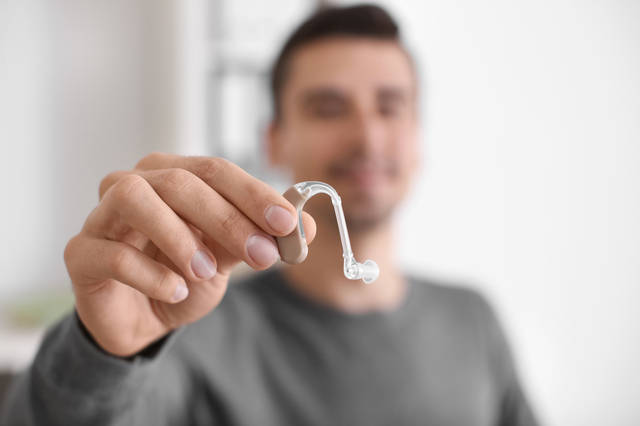
Hearing aids are good news for hearing impaired patients. The elderly, deaf children and adults with progressive hearing loss need to wear hearing aids to meet the needs of daily social communication. However, hearing aids are not therapeutic devices after all, and can not help restore hearing. The essence of hearing aids is just a "sound amplifier". With the help of high-tech technology, useful sound signals can be amplified to help users improve their listening conditions and communication quality. Wearing hearing aids requires appropriate occasions and environments.
What environment should hearing aids avoid?
First of all, don't wear it in a noisy environment or occasion. No matter how good the hearing aid is, it is not as good as the human ear. The upper limit of the normal hearing of the human ear is 20000 Hz, while the hearing aid can reach 8000 Hz at most. If the environment is noisy, the effect of wearing a hearing aid to improve hearing is very general, even has no actual effect.
Secondly, do not use it in humid environment, let alone wear hearing aids to swim. Because hearing aid is an electronic high-tech equipment, it is afraid of moisture and water. Therefore, attention must be paid to the matters needing attention in the use process, otherwise, it will not only affect the use effect, but also greatly reduce the service life of expensive hearing aids.
Third, wear hearing aids, do not carry out strenuous sports, because hearing aids are afraid of falling, if wearing hearing aids running, playing ball, in case of falling out will affect the service life of hearing aids.
In addition, we would like to remind people who need to wear hearing aids. Hearing aids are professional hearing aids and need to be adjusted to wear them. Hearing impaired people must go to a formal institution to receive a comprehensive audiological examination, which is checked by professionals. Don't buy and wear it at will, so as not to damage the residual hearing. If the quality of hearing aids is not up to standard and the fitting is not suitable, it may cause further hearing damage.
intended for
① According to the average loss of speech frequency in pure tone audiogram, hearing aids are not needed when the threshold is between 0 and 30 dB. 30-45db is available or not, and it is selected according to the situation. 45 (or 40) ~ 90dB should be recommended, and most of them can obtain satisfactory results. However, it is suggested that high-power hearing aids should be used before the age of 2-3 years for infants and young children, which is of great significance for the development of oral ability by using residual hearing.
② Even if the hearing is 55-70db and the age is over 8-12 years old, most of them will not get satisfactory results. Hearing aids should be used before age 5 or 6 at the latest.
③ If the loss of both ears is the same and the dynamic range is similar, the effect of binaural hearing aid is the best.
④ The difference of hearing loss between two ears is more than 30dB. One ear hearing aid can be used for the side with high speech discrimination and wide dynamic range.
⑤ The hearing loss of one ear is less than 40 dB, while that of the other ear is about 60-70 dB.
⑥ The hearing loss of one ear is 60-70db, but the hearing loss of the other ear is much greater than this value, so the former should be used.
⑦ If the hearing curve of both ears is not consistent, it should be used on the flat side.
⑧ The hearing aids with automatic gain control (AGC) (or AVC, arc) and PC devices should be recommended for the patients with positive rejuvenation phenomena such as presbycusis, noise deafness, drug poisoning deafness, etc.
⑨ It is better to use hearing aids in patients with functional deafness (hysteria or neurosis).
⑩ However, some scholars in some countries advocate that children with total hearing loss should use high-power hearing aids before the age of 1 or 2 years. The comprehensive communication method is helpful to the development of language communication ability. One ear is totally deaf and the other is normal. Generally speaking, hearing aids are not needed. But recently, some hearing experts in some countries advocate the use of "cros" hearing aids, that is, the microphone equipped with hearing aids on the deaf ear, and the receiver can lead the sound into the healthy ear, which is helpful to listen to the sound signal from the bad ear. When the hearing loss of both ears is more than 70 dB, it should be equipped with a binaural hearing aid. In order to avoid feedback whine, some countries use the so-called bicros hearing aid.
About the daily maintenance of hearing aids
Patients should often maintain the hearing aid, damp or the accumulation of earwax, can affect the use of hearing aids. Careful care and maintenance of hearing aids may prolong their service life.
moisture-proof
Moisture proof is the key to the maintenance of hearing aids. Tell the patient to remember that the hearing aid can not enter the water. Be sure to remove the hearing aid when washing face, bathing, swimming and raining. The moisture-proof method for any hearing aid is the same. Remove the hearing aid before going to bed every night and put it into a container containing desiccant (if used every day, open the battery compartment instead of taking out the battery). When the color of the desiccant changes, it needs to be treated accordingly and updated if necessary. Do not contact the desiccant directly to prevent the hearing aid from being corroded by the desiccant.
clean
Proper cleaning can improve the service life and effect of hearing aids. Because hearing aids need to be worn frequently, human excreta (such as earwax, ear secretions, etc.) will affect the service life of hearing aids in varying degrees. Therefore, it is required that every user wearing hearing aids must clean the hearing aids regularly. The specific cleaning methods of hearing aids are as follows:
After daily use, clean the earwax and sweat on the surface of hearing aid with a dry soft cloth. For customized machines, check whether the acoustic tube is blocked by earwax and whether the microphone inlet is blocked by dust. If found, it should be cleaned with a special brush. For the ear back hearing aid, if it is found that the acoustic tube of the ear mold is blocked by earwax, it should be cleaned in time. If there are small water drops in the acoustic tube of the ear mold, the small water drops should be sucked out or dried forever. For box hearing aids, the earwax in the earplug should be cleaned.
Storage of batteries
When buying the battery of hearing aid, pay attention to the battery model, and should not buy too many at a time, and should be stored in a cool and dry place.
When the user does not use the hearing aid, open the door of battery compartment and take out the battery. When the battery power is lower than a certain level, the hearing aid will stop working, or give a "Di" prompt tone, or the sound quality becomes rough and unstable. At this time, the battery should be replaced immediately, and pay attention to the battery polarity when replacing. If it is not used for a long time, the battery should be taken out and put away to prevent the battery leakage from corroding the hearing aid.