Scald is a common phenomenon, which has a great impact on people's skin health. If some patients have local scalds or blisters, it is best to make reasonable adjustments. If there are too many and too large blisters in scalded patients, it is best to go to a professional burn hospital for examination. Do not prick the blisters by yourself, which may lead to infection Local infection, sexual lesions, may also lead to the symptoms of leaving scars, on the human skin health will have a great impact.
1. Should a burn blister be retained, removed, or completely removed?
This problem is also a long-standing doubt in the medical community. There have been both positive and negative arguments. However, research papers in recent years have shown that it seems that the blisters should be removed or completely removed, which is supported by many people. The most correct way, or as soon as possible to the hospital for treatment, after all, their own pick easily infected.
How did the blisters come from? After skin burn, the epidermis and dermis are separated. The inflammatory reaction begins. The tissue fluid enters into the blister. The water in the blister is not only water, but also contains a lot of inflammatory substances and growth factors. Those who support the retention of blisters argue that the retention of blisters can reduce pain and infection, and some components of the tissue fluid of the blister can promote wound growth And angiogenesis.
The argument of those who support the removal or removal of blisters is that the inflammatory substances in the blisters will hinder the wound healing and deepen the burn depth, and the epidermis forming blisters is necrotic, and the large necrotic epidermis will only form a hotbed for bacteria to grow, and the removal of blisters can also allow doctors to accurately assess the depth of burn, and then choose the method of dressing.
Small bubbles can be removed directly with larger ones
According to the doctor, blisters have both advantages and disadvantages. Therefore, in the outpatient service, very small blisters can be retained. It will be absorbed by itself in about a week. For patients or children who are afraid of pain, doctors will cut the blisters to let the tissue fluid flow out and then bandage them. However, for large blisters, it is usually recommended to remove them directly. It should be noted that the medical staff should remove them by aseptic technology, not by themselves to avoid bacterial infection. It's true that the wound will be more painful after removal, but now the medical science has made great progress. The pain degree of dressing is the same as that of no removing blisters, and the dressing does not need to be changed every day.
"It's said that blisters are less scarred than blisters?" Research has confirmed that there is no such argument. Whether or not to leave scar is related to the depth of the burn, and the wounds above the second degree are basically not scarred. Simple method of discrimination: as long as the burn wound healed within 14 days, it will not leave a scar.
2. It's easier to keep the wound ventilated, OK?
People often think that the wound should be ventilated, not stuffy, and it will get better faster. This is a wrong idea. After removing blisters, the first thing to do is to keep the wound moist.
In the 1960s, some scholars proposed the occlusive dressing method. They found that the epidermal cells migrated faster in the moist environment, thus shortening the healing time of the wound. In fact, just like the soil, the dry desert can never grow luxuriant plants. Now, the principle of care for burn wounds is to keep the wounds moist, such as using ointment, artificial skin, seaweed glue and foam dressings to keep them moist, but not too wet. Otherwise, there will be problems of wound infiltration and healing.
The dressing needs to be replaced regularly, and the artificial skin should be changed once every two days
Therefore, the dressing needs to be replaced regularly. The artificial skin should be replaced once every two days. For wounds with large amount of exudation, foam dressing can be selected. Some products can even be replaced once a week, which can save money and improve the patient's comfort.
As for the sealed dressing method, there is more controversy: in the use of infectious wounds, general doctors will change to open wet dressing. However, in recent years, many dressings have been added with antibacterial and bactericidal ingredients, so that doctors and the public can be more widely used, even if there is no infection of the wound, it can be used for prevention.
3. How to deal with burns scientifically?
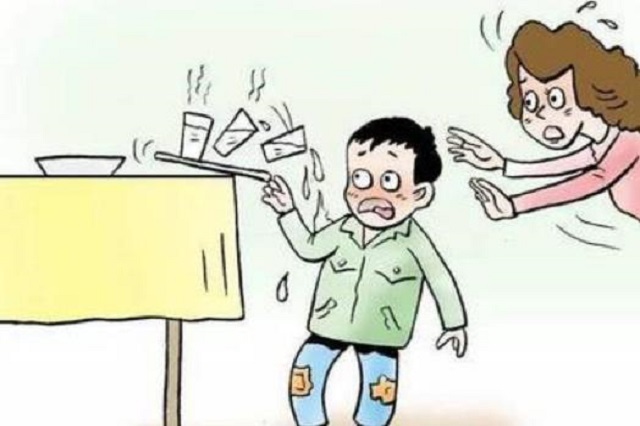
What should be done if there is an accident of burns and scalds? It is very important to make scientific and reasonable disposal at the first time. First of all, don't panic or blindly deal with it, which can not help patients, but will bring more harm and pain to patients. The specific operation methods are as follows:
1. Cold water washing: in case of burn and scald, the patient should be quickly removed from the fire or heat source, and the affected area should be washed with tap water for 15 to 20 minutes to achieve the effects of cooling, reducing residual heat damage, relieving swelling pain, preventing blistering, and so on, so as to avoid damaging deep skin due to excessive temperature.
2. Timely anti-inflammatory: cotton swab dipped in light salt water gently smear burn, can play an anti-inflammatory role.
3. Do not blindly handle: do not immediately take off the clothes of the patients, because the skin and clothes adhere at the moment of burning and scalding. Taking off clothes will cause the wound surface to fall off and cause the injured part to be damaged again. If the wound has small blisters, do not break it by yourself, so as to avoid infection of the wound.
4. Don't use folk formula: many people will apply vinegar, toothpaste and other "Earth" on the wound after burns. These "earthwork" have no scientific basis. They can not achieve the purpose of treating burns and scalds, but will make the wound mold unclear after being coated with solid or liquid with color, which will cause great inconvenience to the wound cleaning and increase the pain of patients.
After cold water cooling treatment, the patient was immediately sent to the hospital for treatment. In the process of transportation, pay attention to avoid wound infection, use clean sheets, clothes and other simple bandages, and avoid pressure. At the same time, pay attention to prevent bumps and maintain the speed.
Tips: for burn and scald patients, in the diet should pay attention to avoid eating spicy, fat, fishy things. Especially for patients with severe burns and scalds, the diet should start with a small amount of trial meals and gradually increase to avoid acute gastric distension and diarrhea.